
Guidelines to support Safe Staffing in Retail Pharmacy Businesses
The purpose of these guidelines is to support pharmacy owners and those in pharmacy governance roles in ensuring safe, effective, and compliant staffing arrangements that prioritise patient safety and quality of care.
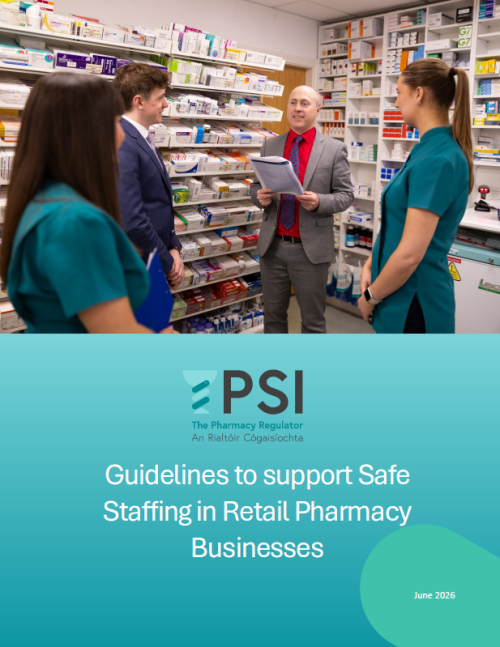
Guidelines to Support Safe Staffing in Retail Pharmacy Businesses
DownloadAbout the Guidelines
Safe staffing is a foundational component of all healthcare settings, including retail pharmacy businesses. Given the increasing complexity of clinical services delivered in community pharmacies, and the inherent risks associated with the sale and supply of medicines, it is essential that staffing arrangements support the continued delivery of safe, effective and compliant pharmacy services to the public.
These guidelines set out the accountability and responsibilities of pharmacists and those in pharmacy governance roles to facilitate compliance with the Regulation of Retail Pharmacy Business Regulations 2008 (as amended). It is important that there is clarity and understanding about where accountability lies and where responsibility exists.
The purpose of these guidelines includes:
- Clarifying the responsibilities of governance roles in staffing decisions.
- Supporting ongoing improvements in quality and patient safety.
- Introducing a main principle and accompanying indicators to embed safe staffing assessment and practice.
- Highlighting the link between staff wellbeing, staff retention and patient safety.
Every pharmacist has an important professional role to play in actively monitoring and raising any staffing issues. In particular, the guidelines seek to support those in pharmacy governance roles and make clear their responsibilities so that they may identify any imbalance between the demands on pharmacy staff and the human resource capacity available.
The publication of the PSI’s Guidelines to Support Safe Staffing in Retail Pharmacy Businesses represents an important milestone in supporting the continued delivery of safe, effective and patient-centred pharmacy services to the public.
The development of these guidelines was informed by extensive engagement with pharmacists, those in pharmacy governance roles, representative bodies and other stakeholders, and reflects recommendations arising from the PSI Workforce Intelligence Report. The guidelines recognise the significant evolution of pharmacy practice and the increasing demands on pharmacists and pharmacy teams as the profession continues to expand its contribution to safe, effective and patient-centred care.
Safe staffing is a foundational element of safe and effective pharmacy practice. It is not simply a question of the number of staff present in a pharmacy. Safe staffing requires consideration of the range and complexity of services being delivered, patient needs, workload, staff competence and skill mix, supervision arrangements, and the provision of appropriate rest breaks. It also requires pharmacy governance arrangements that support pharmacists and pharmacy teams to carry out their professional responsibilities safely and effectively.
The guidelines place particular responsibilities on those in pharmacy governance roles, including pharmacy owners, superintendent pharmacists and supervising pharmacists. Those with governance responsibilities must ensure that staffing levels, skill mix, resources and working arrangements are appropriate to the services being provided and support the safe delivery of patient care. Safe staffing arrangements must be regularly reviewed and adapted as services, workload and patient needs change.
However, safe staffing is not solely the responsibility of those in governance roles. Every pharmacist has an important professional role to play.
As healthcare professionals, pharmacists must continually assess whether the staffing, resources and working environment available to them are sufficient to support the safe and effective delivery of care and the exercise of their professional judgement in the interests of patient safety. Where a pharmacist believes that staffing levels, staff mix, workload or other resource constraints may compromise patient safety, they have a professional responsibility to raise those concerns and work constructively with those in governance roles to address them.
Where concerns about staffing, workload or resources are not adequately addressed, or where patient safety may continue to be affected, pharmacists should escalate those concerns through appropriate channels. Raising concerns about risks to patient safety is an important part of a pharmacist’s professional responsibility and contributes to a culture of openness, continuous improvement and safe patient care.
The PSI has previously highlighted the importance of appropriate work breaks for pharmacists and pharmacy staff. Fatigue can impair professional judgement, concentration and decision-making, creating avoidable risks for both pharmacists and patients. Professional judgement is at the heart of pharmacy practice, and pharmacists must be supported to exercise that judgement in an environment that enables the safe and effective delivery of care. These guidelines reinforce the importance of ensuring that staffing levels, skill mix, resources and work arrangements, including appropriate opportunities for rest and recovery during the working day, support pharmacists and pharmacy teams in providing safe, high-quality care to patients.
I recognise that implementing and sustaining safe staffing arrangements may require changes to established practices, staffing models and ways of working. Nevertheless, the safety and wellbeing of patients and the public must remain our primary consideration. Recent years have demonstrated the adaptability, professionalism and commitment of pharmacists and pharmacy teams in responding to changing demands. I am confident that this same commitment will support the implementation of these guidelines.
I encourage all pharmacists, pharmacy owners, superintendent pharmacists, and supervising pharmacists to familiarise themselves with the guidelines and reflect on how the principles can be applied in their own practice settings. Working together, we can strengthen the foundations of pharmacy practice and enhance the provision of safe care and services to patients and the public.
Joanne Kissane
Registrar and Chief Officer
July 2026
The development of these guidelines included a public consultation and the consultation report is also available.

