PSI Annual Report and Financial Statements for 2025 is published
We have published our Annual Report and Financial Statements for 2025, outlining the many ways the PSI has delivered on our core mission to assure patient safety and public trust by regulating pharmacists and pharmacies in Ireland.
Key Activities for PSI in 2025 included:
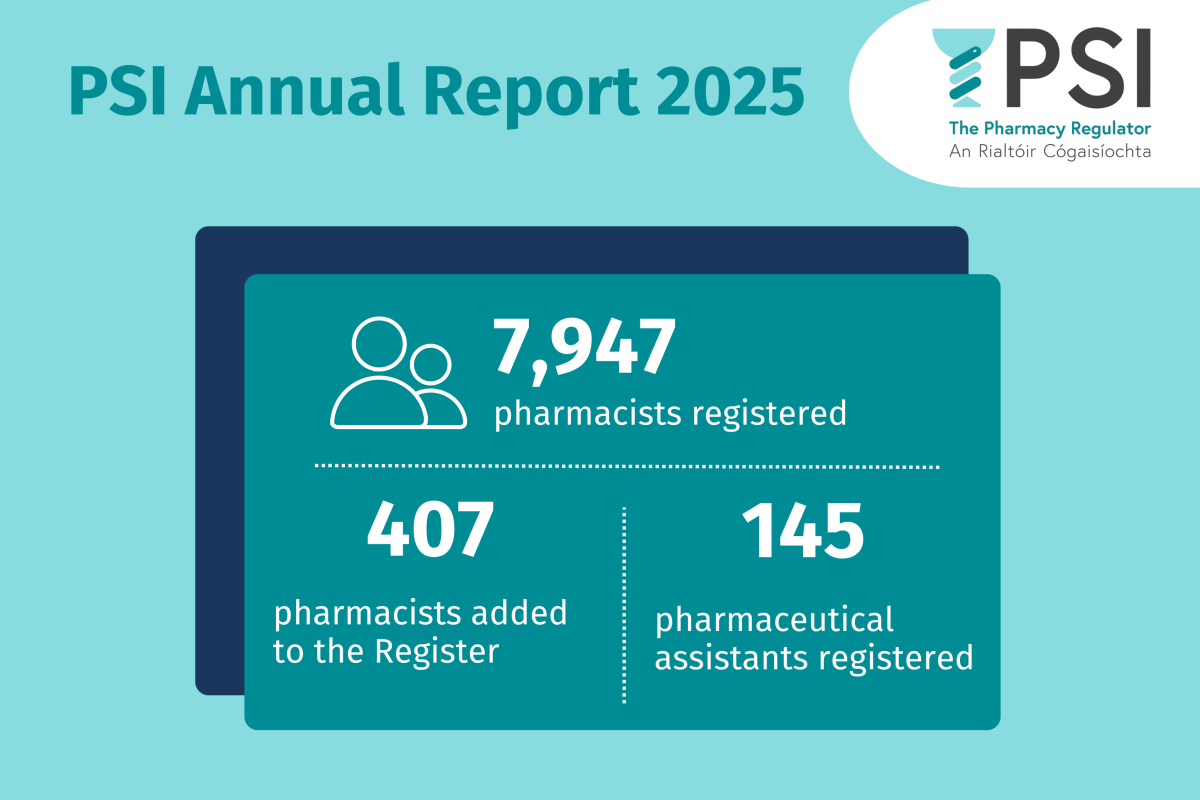
- 7,947 pharmacists registered at year end
- 407 new pharmacists added to the Register
- Net increase of +216 pharmacists registered between 2024 and 2025
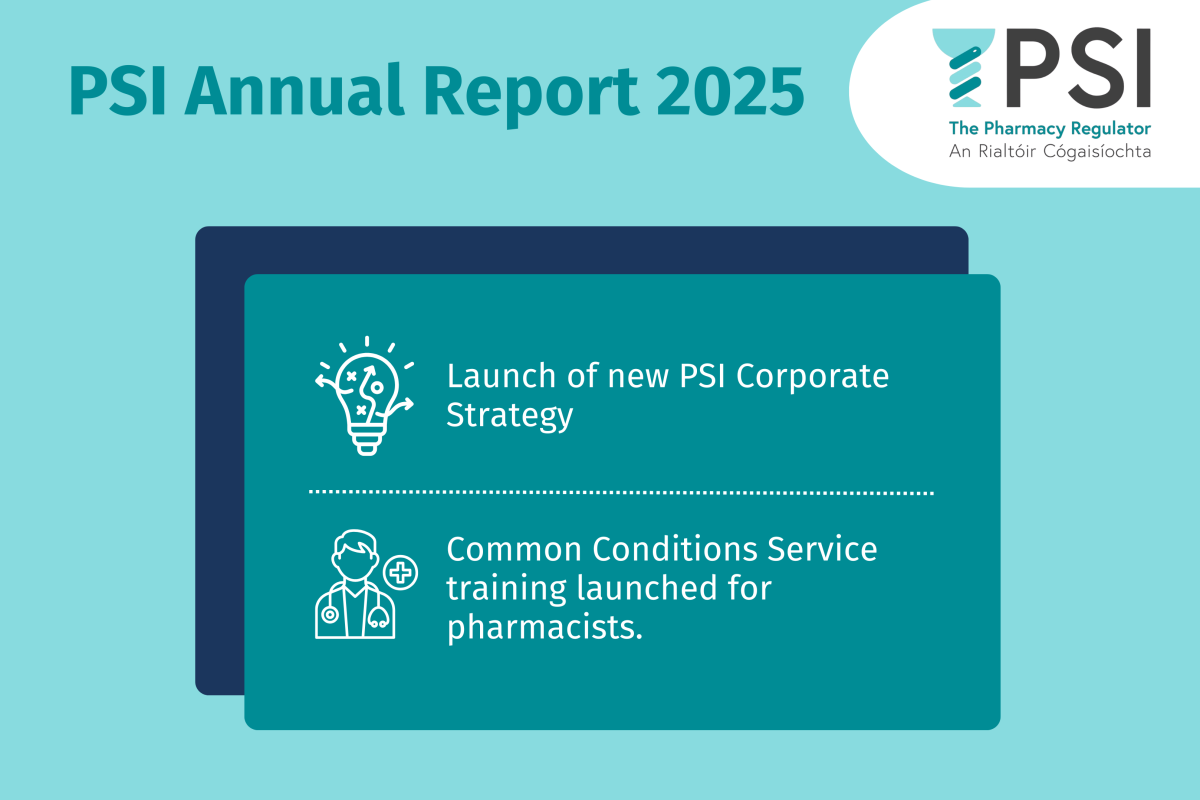
- Common Conditions Service (CCS) training launched for pharmacists
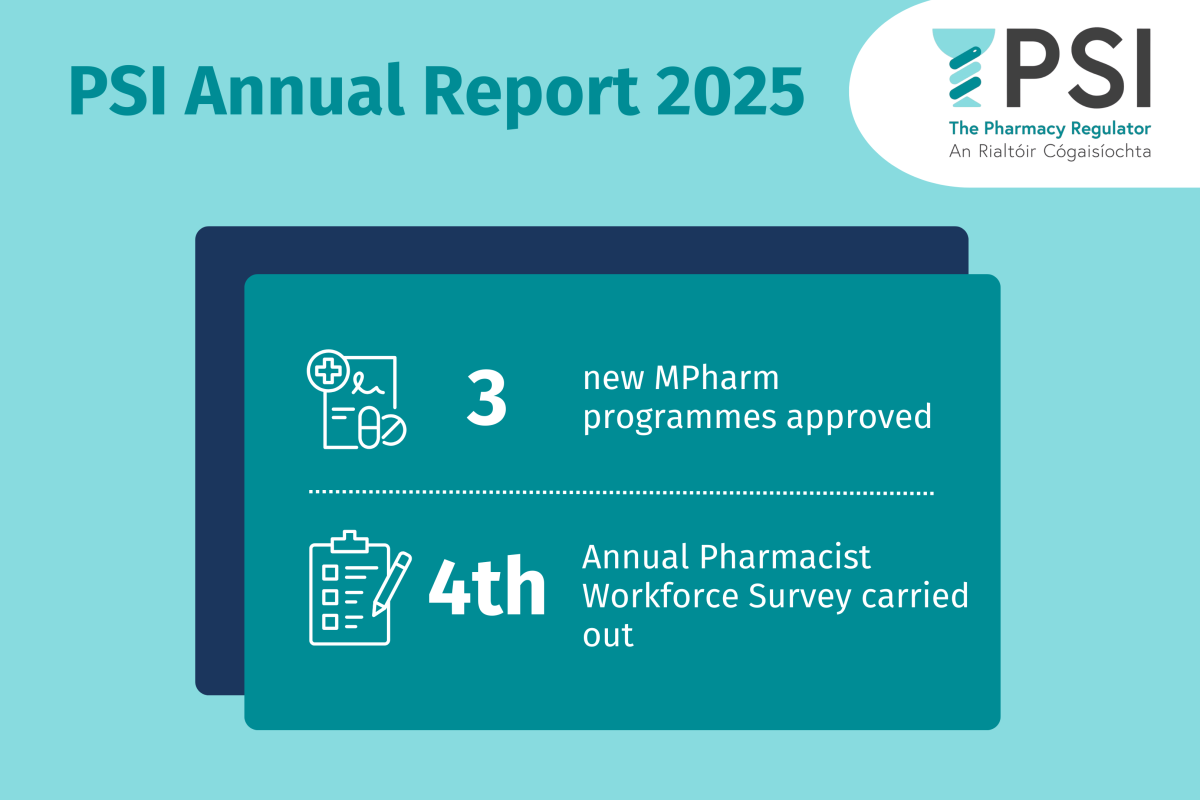
- Three new Masters in Pharmacy (MPharm) degree programmes approved
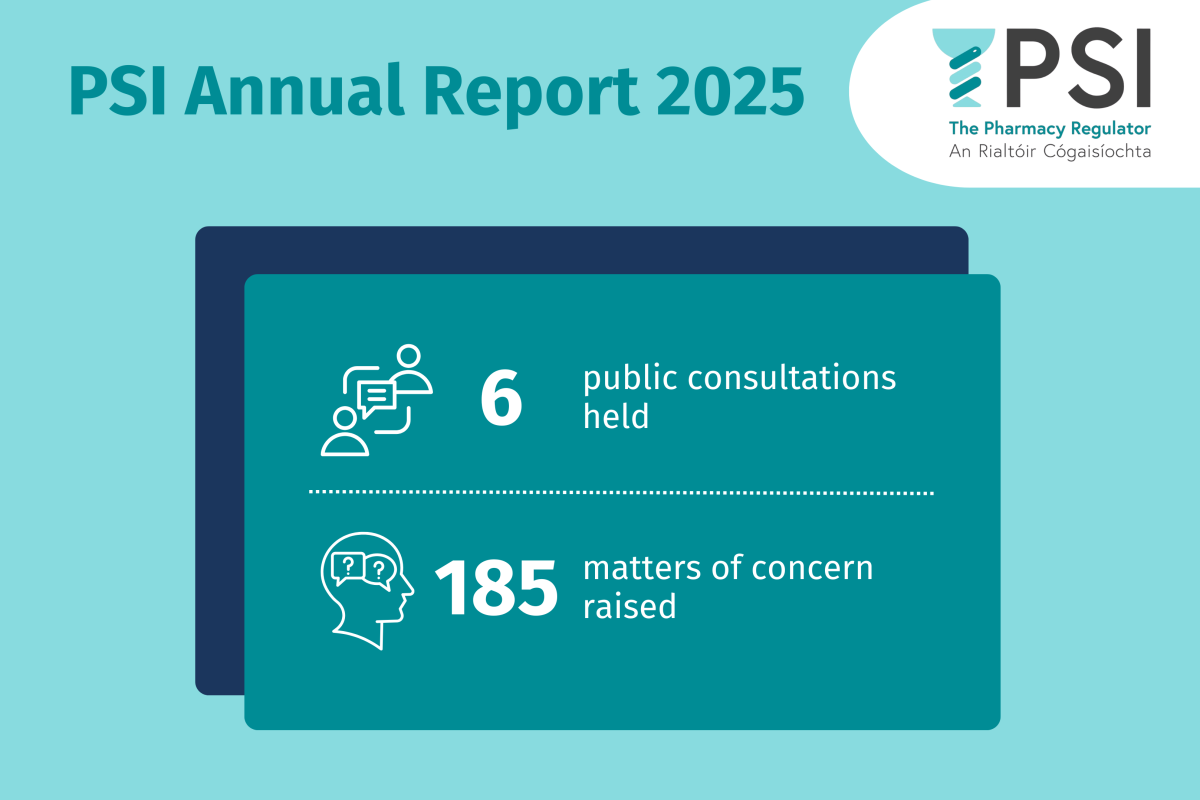
- Six public consultations held across a range of topics
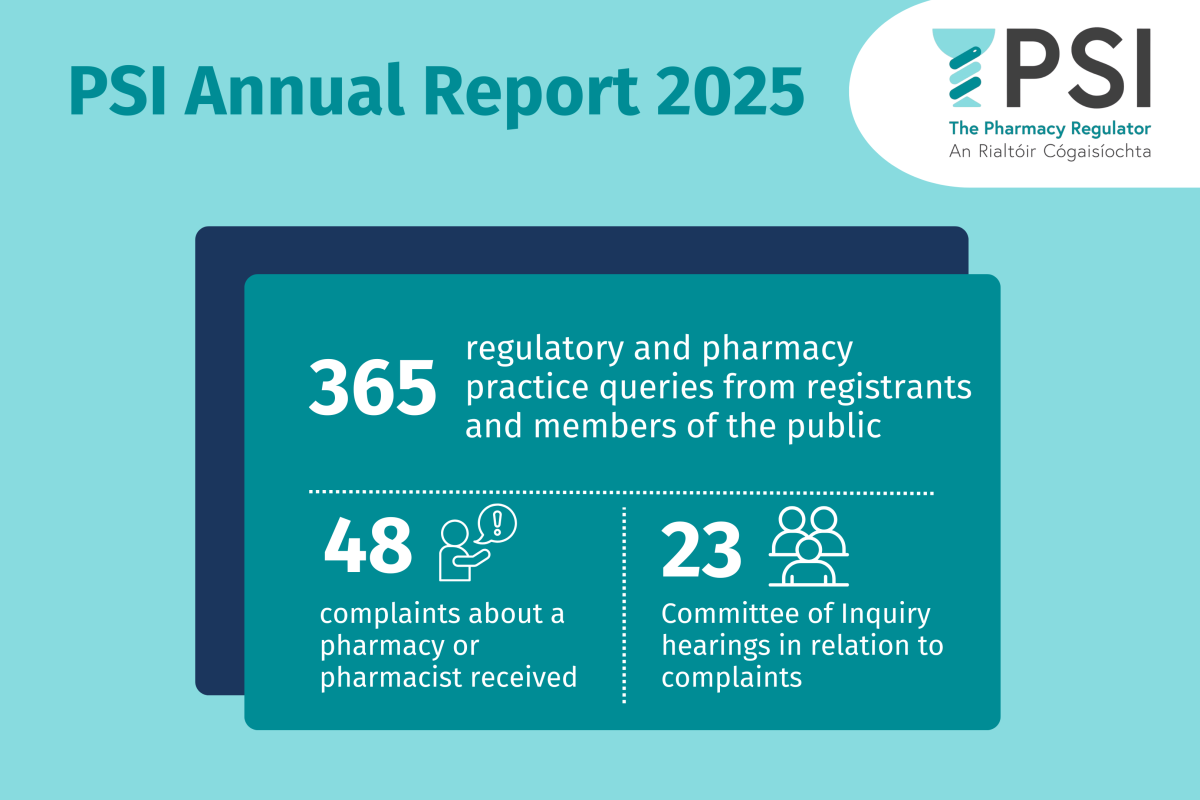
- Handled 365 regulatory and pharmacy practice queries from registrants and members of the public
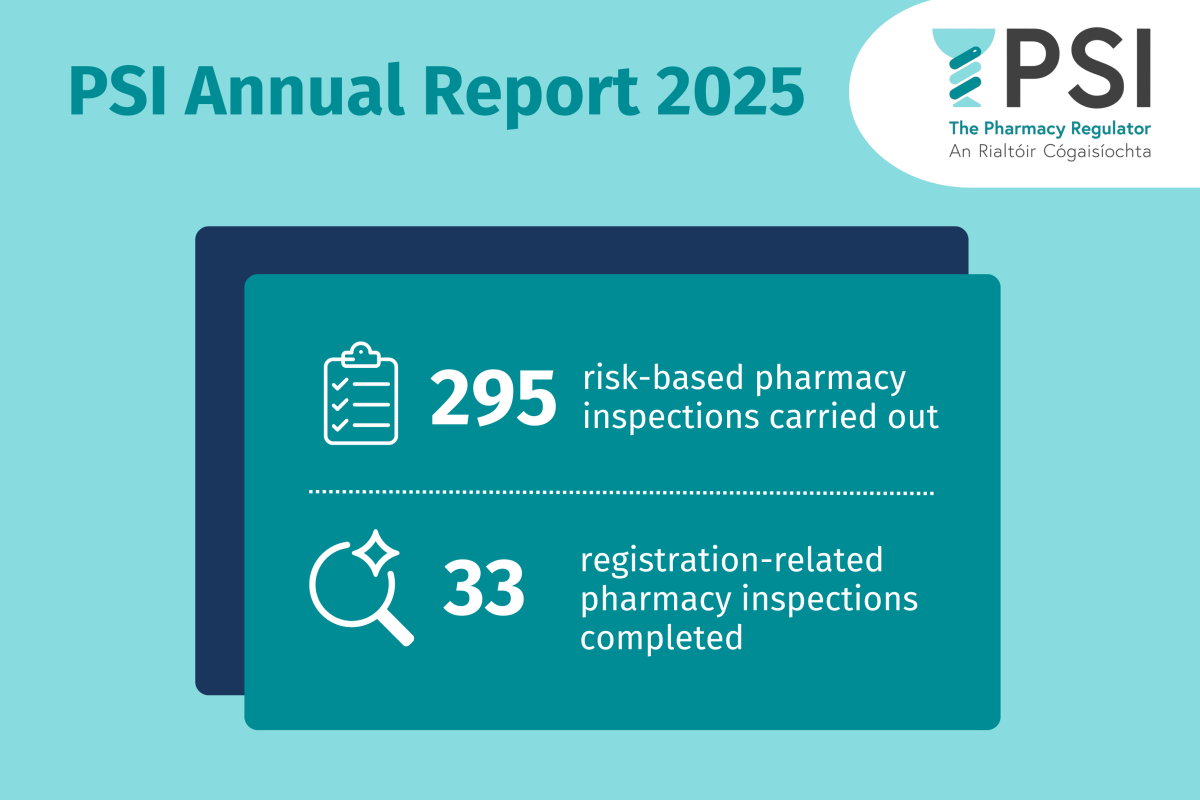
- 328 pharmacy inspections conducted
- 185 matters of concern raised by members of the public with PSI. Top three categories were practice management issues (117), behaviour/manner (59) and failure to provide a medication (20)
- 48 formal complaints about a pharmacist or pharmacy received during the year
- Launch of new PSI Corporate Strategy 2025-2028
- Publication of principle-based guidance for pharmacies to enhance the availability of pricing information for the public
- Awarded Health Research Board (HRB) funding for a project with the Royal College of Surgeons (RCSI) to examine and enhance patient and public involvement (PPI) in pharmacy and healthcare regulation
Commenting on the publication of the Annual Report, PSI Registrar and Chief Officer Joanne Kissane said,
“We believe the public is entitled to expect and receive a high standard of care from pharmacists and pharmaceutical assistants, and that pharmacies should operate to a high standard. Our annual report demonstrates how we continued to carry out all aspects of our statutory role to support and maintain the provision of safe pharmacy care and services.”
2025 marked the first year of implementation of the PSI’s new corporate strategy, developed to account for and respond appropriately to the significant policies driving changes in pharmacy and, more broadly, in healthcare delivery. The strategy emphasises facilitating pharmacists' greater role in an evolving healthcare system, including digital transformation plans, and the PSI’s focus is on providing regulatory and legislative perspectives and ensuring that education and information underpin changes in support of pharmacy professionals and patient safety.
“The strategy has a focus on the implementation of the Department of Health’s Expert Taskforce recommendations for pharmacy so that we can adequately support pharmacy to play an expanded role in our healthcare system. At the same time, we must continue to fulfil our core public safety remit...”
“At the same time, we must continue to fulfil our core patient and public safety remit through our responsibilities in relation to registration, education, oversight, complaint management, and the provision of information and advice.”
There was significant work by the PSI in preparing for the implementation of the Common Conditions Service (CCS) in pharmacies, a new consultation-based health service available to the public. It enables community pharmacists to manage and treat patients for eight common conditions by offering self-care advice, safety netting and, when appropriate, prescribing certain medicines in accordance with approved HSE clinical protocols. Its implementation required significant collaboration across policy, health and pharmacy stakeholders and the PSI was particularly involved in the consideration of relevant legislative changes, training and guidance development for pharmacists.
“It is clear that many pharmacists are keen to enhance the health care services they can offer to their patients in the community. To date, almost 4,000* pharmacists have completed the required CCS training delivered through the Irish Institute of Pharmacy (IIOP). This introduction of the Common Conditions Service represents a significant milestone both for pharmacy practice and patient care. It facilitates pharmacists to leverage their expertise as medicines experts and contribute more fully to the delivery of effective, timely care in a local and highly accessible setting for the public.”
The PSI's ambition is to ensure that it incorporates greater public and patient involvement (PPI) across all aspects of its regulatory role. The PSI has partnered with the Royal College of Surgeons in Ireland (RCSI) on an innovative research project to examine the role of patient and public involvement in pharmacy and healthcare regulation and to develop tangible solutions to increase meaningful PPI contributions. The project was awarded funding by the Health Research Board (HRB) in 2025.
“We are confident that the outputs from the two-year project led by Professor Michelle Flood (RCSI), with PSI as the principal case study, will provide significant findings of value for both PSI and other healthcare regulatory bodies in Ireland.”
With its responsibility for setting pharmacy education and training standards, programme accreditation was a significant focus for the PSI early in 2025. Accreditation teams visited existing MPharm programme providers (Trinity College Dublin, University College Cork and Royal College of Surgeons) as well as institutions seeking to establish new student programmes. Three new MPharm programmes at the University of Galway, Atlantic Technological University, and South East Technological University (SETU) were approved by the PSI Council last year. From Autumn 2026, six MPharm courses will be available to people wishing to study pharmacy in Ireland. The availability of a greater number of student places aligns with actions in its Workforce Intelligence Report about the availability of the pharmacy workforce to meet future patient and healthcare needs.
As part of the broader workforce programme, the PSI continued to progress matters through the Pharmacy Workforce Working Group, a joint initiative of the PSI and the Department of Health. Activity included the annual workforce survey of pharmacists, which provides valuable data on workforce-related matters, and the drafting of new pharmacy safe staffing guidelines.
Other significant projects at the regulator were progressed under the third objective of its strategy - to enhance and align organisation and people. An organisation structure review was undertaken and implemented in the first half of the year, and an examination of the PSI’s funding was concluded with recommendations for registration fee increases to ensure the organisation’s ongoing sustainability and ability to effectively deliver its statutory responsibilities.
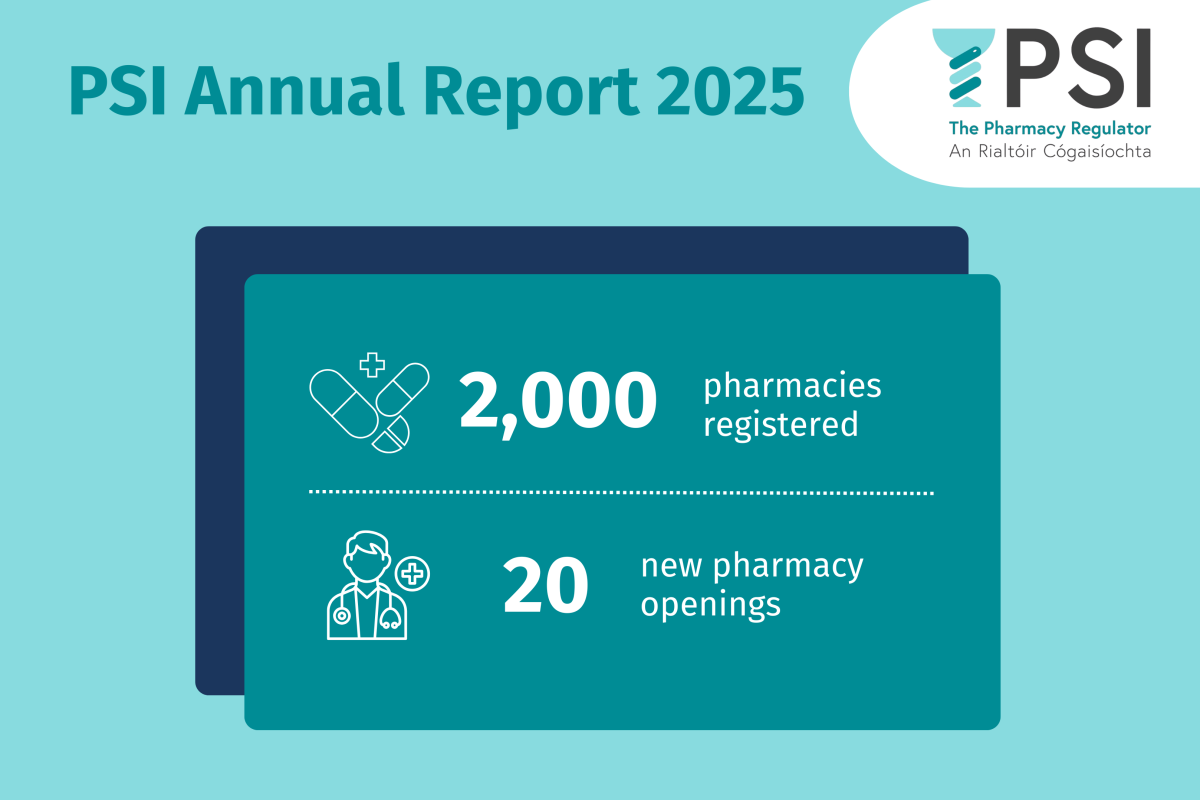
A core function of the PSI is to register suitably qualified pharmacists, pharmaceutical assistants and pharmacies, and to maintain these registers. By the end of 2025, more than 7,900 pharmacists and 2,000 pharmacies were registered in Ireland. Both registers continued to grow, with the number of pharmacists increasing year on year. The revised Third Country Qualification Recognition (TCQR) process, for those applying with a pharmacist qualification from a non-EU or non-EEA country, also came into operation and drew strong interest, with 364 applications in 2025, up by more than 50% from 147 the previous year.
As the body responsible for registering and regulating pharmacy premises, the PSI conducted 328 inspections of pharmacy premises in 2025. In addition, 8 investigations were commenced where there was reason to believe that potentially serious public safety issues or major non-compliance exist in relation to a pharmacy or pharmacist.
In line with its statutory responsibility to receive and handle complaints made about pharmacists and pharmacies, 48 complaints were received in 2025. 23 hearings were commenced before a Committee of Inquiry in 2025 in relation to complaints. The outcomes and sanctions of concluded inquiries are noted in the Annual Report. Where other matters of concern are also brought to the attention of the PSI, a PSI team reviewed and took actions to address these. 185 concerns were recorded for 2025. The highest categories of concern raised with PSI were pharmacy practice management issues (117), followed by behaviour incorporating manner/attitude (59) and failure to supply a medication/treatment (20).
President of the PSI Dr Denis O’Driscoll said,
“As the governing body of the PSI, Council plays an important role in ensuring that the organisation is appropriately resourced, strategically focused and delivering upon its remit in the public interest. Our annual report documents the significant programme of work undertaken by PSI including maintaining high standards for registration, education and the delivery of pharmacy services. It highlights the PSI’s involvement in pursuing national initiatives that will drive patient and health service changes, progress on pharmacy workforce-related matters, and the implementation of recommendations of our Core Funding Review which will ensure the financial viability of the organisation.
"As a Council, we were pleased to approve three MPharm programmes in new locations across the country and acknowledge the immense work of the institutions and accreditation teams."
“The Council was also keen to see work progress with the Department of Health to advance reform of the Pharmacy Act and applauds the response of the PSI team to meet legislative and policy developments as they arose."
"It was a busy and exciting year as demonstrated in preparations for roll-out of the Common Conditions Service for the public. As we reflect on the actions and outcomes of another year, I want to commend the work of colleagues and the many stakeholders in pharmacy and the broader health system with whom we engage. This annual report highlights, more than ever, the significance of collaborative approaches to achieving meaningful outcomes for safe and effective pharmacy and healthcare provision.”
* 3,967 pharmacists had received certificates of completion for the required Common Conditions Service training components. Data from the Irish Institute of Pharmacy (IIOP), 25 June 2026.